Saturday, September 28, 2019

Tagged under: , , , , , , ,

[Review] Green Book (2018)

"You never win with violence, Tony. You only win when you maintain your dignity." - Dr. Don Shirley

Green Book plays like most movies that tackle racism from the past, an undeniably sugary, feel-good drama that everyone can’t help but adore. That’s true for many reasons. Bearing many resemblances from Driving Miss Daisy, its concept is pretty much paint-by-number: a portrayal of two polar opposites dealing with unfortunate ‘events’ that come along the way. This time, the roles are reversed with our two leads, Mahershala Ali and Viggo Mortensen, taking us to a road trip bound to be bumpy and affecting. Mortensen’s Tony, with a paunch and a Bronx accent, is high-octane in his laid-back, carefree demeanor, flaunting his singularity every time those boastful talks come out of his mouth. Ali’s Don is anything but that: he’s a stoic, one that endures the long-suffering strain of being a nonconformist in his own world and the other. Reserved, detached, and deemed too sophisticated, yet portrayed with such gravity that he defines his own charm, Ali delivers what may well be his best performance to date. Put them both in one frame, and the result is as spellbinding as ever. Fueled by their warmth, humor, and strength, it’s one of those fiery dynamics that keeps us engaged, hitting most of its highly pleasing notes without even breaking a sweat.
Still, even when the dynamic duo’s effortless presence operates at a pristine level, the narrative sadly doesn’t. As funny and as delightful as it is, Green Book never walks out of its well-trodden territory with its chin up. Addressing racism is never easy, and in a year of BlacKkKlansman, Blindspotting, and The Hate U Give, Green Book shies away from tackling it right. It does try, though, but instead of plunging deeper to confront its subject, Green Book simply squishes through the swampy mud, drenched in it yet never gutsy enough to penetrate. Anchoring too much to their magnetic relationship might be their strongest and weakest link, as it eventually dwarves its already outward, simplified display of racism and disenfranchisement. In the end, Green Book does appear to be another case of Driving Miss Daisy: a flattening of history that pleases both sides, which works really well in that regard, a fairly typical Hollywood effort that doesn’t have anything to write home about, yet offers you a real good time that rarely any film does. Well-intentioned and endearing through and through, Green Book’s approach to its sensitive topics may be too clean-shaven and confusing at times, but its two formidable, dazzling stars still manage to overcome its rather passive outcome, as they’ll laugh, struggle, and cheer with you.

Sunday, September 22, 2019

Tagged under: , , , , , , , ,

[Review] Ad Astra (2019)

"The enemy out here, is not a person or a thing, it's the endless void." - Thomas Pruitt

Visually ambitious and thematically grounded, As Astra goes as far as the stars yet its echoes are still reflective even from billions of miles away—well, technically we're going to Neptune, but you get the idea. An odyssey that speaks in its most poetic tongue, Ad Astra is also an introspective reverie that makes great use of its vast of nothingness to unearth a brimming sense of catharsis. Gray's direction wanders in a measured rhythm, that knows how to soar into its intense stillness. In its remote moments, you can't help but get drawn in its mighty splendor, a meditation that never asks us to ponder things, we simply—and willfully—get captivated. This science fiction is more about fiction than science itself, but as it shows in its more thrilling split seconds—from scavenging moon pirates to killer baboons in space—the whole thing is deliberately borderline silly and out of place, yet strangely enough, as Gray distances us from the world we're so familiar with, it never crosses that mindless line.

Over and above its daddy issues, Gray and Gross' script dilates its premise by engaging us through our protagonist's grueling personal battle and shadows of his buried nightmares, interlocking the past and the present in a father-and-son relationship to unfold how toxic masculinity and the lack of emotional awareness is perpetuated, kept in existence through generations. Marking Brad Pitt's return to his best form, his performance as emotionally detached astronaut Roy McBride commands the entire space voyage with a different mold of self-assurance we rarely see in his usual work. He's firm and understated, distant yet intimate, all things in one. It's essentially a one-man show, where Brad Pitt is given so much scope through his bounded and restrained sense of thereof. This is not without help of the script, which deliberately dims other characters to create an inward-looking stance that allows us to descend deeper into McBride's state of mind, shying away from reality and manifesting his solitude in full display. The result, is colossal in magnitude and deep-seated in scope, a spectacle that's beautiful beyond measure and a moving journey that finds a contemplative eye in a subdued desolation, seizing attention and emotions once your head gets around its orbit.

Thursday, August 29, 2019

Tagged under: , , , , , , ,

[Review] The Favourite (2018)


His most accessible feature may well be, Yorgos Lanthimos’ The Favourite brings in a cheeky, confrontational tug of war drenched in unrestrained seduction and tempestuous spite that’s as driven as our exquisite leading charmers. So familiar yet so uniquely newfangled, The Favourite reconstructs, borrows from the greatest yet has plenty of its own to offer, stating its historical frame with self-assured, composed elan and a flare of cynicism. As a caricature of period pieces, this Lanthimos’s latest cinematic offering puts us in an eternal triangle that blurs the line between power and loyalty, where each string-pulling goes quietly frantic and its historical centerpiece evolves into an outlandish misfit. The Favourite gives no room for black-and-white dichotomy, with screenwriters Deborah Davis and Tony McNamara painting our dramatis personæ in brass-necked, mystifying strokes.

Rachel Weisz is both graceful and rock-ribbed, a natural-born poiser with unflinching, irresistible fluency in charismatic stoicism. Emma Stone is simply a delight to witness. A cross between sharp-witted ingénue and hypnotic femme fatale, she smirks in her triumph and gratifies in anything she does. Between them, there stands Olivia Colman: a naive, dewy-eyed ruler whose unfortunate tragedies have translated her into something bigger than a freakish queen who squeezes joy out of duck racing. Her 17 rabbits, representing the loss of her 17 children, are physical manifestations that reflect her darkest, most heart-rending vent of her life, defining her as more than comedic relief, but the heart that echoes humanity in bare, deep insecurity. These three take the spotlight by turns and just radiate as the focus sways back and forth between each other’s agony and glee.


Lanthimos is a sharp-eyed satirist, and as they descend into a circle of hell and clashes of influence, he turns The Favourite into a whimsical c*ntfest that only beguiles and gets nastier with each political flip-flop. Even when it clearly rags on the double-dealing, wicked intentions camouflaging behind its royal grandiosity, how it places moral vacancy is clearly beside the mark. If anything, The Favourite’s fundamental mordant force glisters the brightest as they dig their graves, invoking a bewitching intricacy to untangle: who are those graves exactly for? When we get to the answer, we’re too drawn that who’s six feet under may not even matter anymore, but Lanthimos makes sure that the touchdown is as stinging as the long haul voyage, capitalizing the film’s true kernel that’s akin to All About Eve’s lingering, seismic effects.

With the women, bare-faced, and the men, covered with makeup and sensational wigs, The Favourite makes it clear they don’t play by anyone’s rule: it’s a spin on power-hungry shouting match; snarky, kinky dangerous liaisons of even more cunning ladies, all wrapped in a tragicomedy that stirs appetite for mighty, untamed puppetry. Needless to say, not your first resort to a fact-based history lesson, but an unabatingly fun showcase of downright malice it is.


Tagged under: , , , , , ,

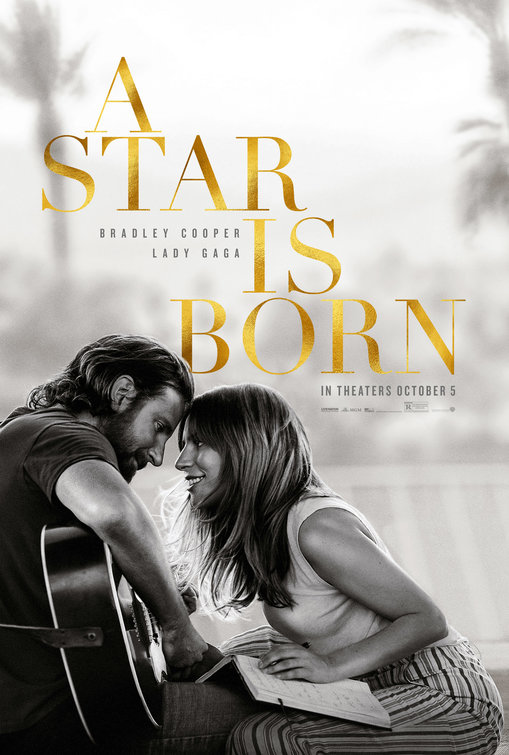
[Review] A Star is Born (2018)


Four, five, or six. That’s how many times they’ve made this story happen. Five, if you count 1932’s ‘What Price Hollywood?’ in. Six, with its Bollywood iteration ‘Aashiqui 2’ included. But like twelve notes between any octave, how we hear them depends on how they see these notes. And here, Bradley Cooper and Lady Gaga digs, deeper to that recurring deep. ‪The first hour is a sugar rush of infectious romantic undertones, and to quote Jackson himself “stuff of angels”. Cooper invests so much in their first encounter, as captivating as Gaga’s sultry rendition of La Vie en Rose and as exhilarating as Cooper’s abrasive riffs in Black Eyes, but the adrenaline peak unveils when the two collide: an intense, earnest moment that rewards audience’s—and their—longing desire in the best possible way. 

As the narrative takes a one-eighty, A Star is Born uncovers its true intention: a forthright depiction of substance dependence and a burlesque of today’s music industry. More than its antecedents, the script treats our two leads with delicacy and depth, as it leaves so much room for them to breathe. Cooper’s Jackson is a redefined epitome of his previous male leads’ self-destructive template. His psyche still revolves around the legacy, but it grants us something vivid and essentially, darker. Gaga’s Ally draws an underlying tie-in between Streisand’s and Garland’s Esther: part rebellious and part timid, she evokes naturalistic presence as her unabridged magnetism takes the centerpiece. In addition, Sam Elliott and Andrew Dice Clay bring strong—though brief—performances that further reinforce our two leads’ dynamics.


A Star is Born is, at core, a Hollywood tragedy, and as evidenced by its previous interpretations, it’s easily overwhelmed by soapy, or even phony remarks. Yet here, realism stands front and center. Cooper’s approach to craft conversation leaves no hollow. Their words to each other aren’t only telling, they’re revealing. Each dialogue exchange is effortlessly articulate and expressively reflective, or to put it simply: they feel real. But crafting doesn’t stop at solidifying flavors. Cooper’s direction projects a magnitude of splendor, achieved by its rhythmic yet dynamic flair between Libatique’s shaky camera movements, detailed close-ups, and well-orchestrated lights and colors. He tries to portray two worlds, one in front of and the other beyond the screen, distinctively. They’re loud and silent, burning and alienating. This decision provides a profound insight into their heads, although comes at a price, noticeably the pacing during the second act. Still, it manages to get back on its feet, as it dives into the third act and rebounds its emotional capstone. 

Musically invigorating, powerfully acted, and emotionally affecting, A Star is Born is a remarkable entrance to Cooper’s natural touch of filmmaking and Gaga’s gifted sense as an actress. It’s intoxicating onstage and passionate offstage, but inside, there’s an intimate gaze into the humane sphere of fame, co-dependency, and addiction that surprisingly, still holds onto its glossy Hollywood apotheosis. And that is, a rare thing.


Saturday, February 24, 2018

Tagged under: , , , , , , , , , , , , , , , , , , ,

2017 Revisited: 25 Movies of the Year, Part 1


The year 2017 was problematic in so many ways, but there's no denying that 2017 was also a phenomenal year for cinephiles everywhere. Paul Thomas Anderson came back, Steven Soderbergh revoked his plan to retire à la Hayao Miyazaki, a marvelous time for female filmmakers (Greta Gerwig, Dee Rees, Patty Jenkins, to Sofia Coppola), a powerful period for independent movies (which, for the most part, we have A24 to thank for), a promising mark for talented young actors (Timothée Chalamet, Saoirse Ronan, to Brooklynn Prince), and a pinnacle year for Indonesian film industry. In retrospect, I've decided to revisit 2017 once again and to see 25 movies that have caught my complete attention throughout the year—well, 20 is too tough to pick and 30 is too much work, hence a list of 25. Still, since overlooked movies are unavoidable, here are some of greatest movies of 2017 that sadly didn't make the cut.


In random order: Pengabdi Setan graces Indonesian horror framework and elevates its material with atmospheric, highly effective dread; Baby Driver proves you can achieve smartly written story along with carefully constructed action sequences in one stylish picture; War for the Planet of the Apes concludes its thought-provoking arc with a heart-stirring, rightfully merited finale for the blockbuster trilogy; The Big Sick elucidates romantic narrative when love looks past cultural contrast and strips down all differences; Logan Lucky welcomes Soderbergh in Coen Brothers' touch of slick heist movie with a lot of humor punches as well as exciting idiosyncracy; the scary good, greatly scary It frightens with on-your-face terrors and shape-shifting fear; Molly's Game unites Aaron Sorkin together with Jessica Chastain in a winning race against ticking time that spits its beat relentlessly; and Wonder Woman embodies its two-word title, 'wonder' and 'woman', with heavily built valor and humane sense of optimism. Now, without further ado, let's jump right into my top picks—the first half.


#25. Marlina the Murderer in Four Acts | Directed by Mouly Surya | Written by Rama Adi, Garin Nugroho, and Mouly Surya 
Marlina the Murderer in Four Acts aims western territory at a newfangled direction, incarnating lionhearted female liberation without losing grip on its unadorned western narrative. Scattered in a four-act structure that's prototypical and quintessential to its genre, director Mouly Surya registers self-determination and maturity in a gut-wrenching discovery where its dulcet true-being equally matched by its plain-spoken fortitude. All the same, the embodiment is truly well-translated by the mighty impetus of its heroines, particularly the eponymous character herself, possessing a commanding quality while striking a balance between inscrutable, nonchalant control and fierce demeanor. Catapulted by Marsha Timothy's unstoppable body of work, Surya yields mostly clear-cut diegesis with multi-layered emotions as vehicle for unfurling the film's female-centric heart, casting naturalistic vengeance along with underlying symbolic voyage within its spectacular visual palette. An indelible inquiry into gender roles, rape culture, and social oppression, Marlina the Murderer in Four Acts bears a formidable apotheosis with sass of confidence and a full streak of vigor, retaining one of today's most important discussions on the map with a cutthroat scenery of cinema.


#24. A Ghost Story | Written and Directed by David Lowery
A Ghost Story places brimful reliance on David Lowery, whose power inflames the unabridged film's ambition. Lowery's approach to his story is fairly unprecedented, in a figure of poetry that endures through orbit of time and yearning. It's a grueling effort to bring a story to life when the titular character barely does anything at all, but Lowery's aim stands in force with a visually telling, dismally prepossessing, and elliptically musing craftsmanship. Having a literal ghost in the eye of the storm, A Ghost Story takes the idea of helplessness into an emotional upheaval in a nowhere-near-unchallenging utterance. It's a melancholy-drenched and hope-filled cruise that appears abstruse in tranquility, but the gravity falls onto a delicately clear-cut niche: a hindsight that only walks forward, not merely a bold retrospect, but rather a deep-rooted introspect. A fully-bodied observation of loneliness and reminiscence accomplished in solicitious inclination and solitary colors, A Ghost Story is a groundbreaking arthouse answer to elegiac exploration of long-standing relics of love and loss. 


#23. The Post | Directed by Steven Spielberg | Written by Liz Hannah and Josh Singer
The Post works both as an uncomprimising exposé and a pulse-throbbing suspense, finding Steven Spielberg in his ultimate form, once again. Carrying a much simpler premise than its peers—yes, I'm talking about All President's Men and Spotlight—The Post might not be the primal choice for those looking for an in-depth history-based account which intricately sweeps every side of corridor, but it captures the essence of heroism in the right place. Within the period when the press served the governed, not the governors, The Post evinces a fight-or-flight instinct in highest contentment, running against the expected and all the odds. It's anchored by the headlining performance from Meryl Streep, in which she ascends an arc that's unbelievably soaring. As one of the vital forces fortifying the resistance, her articulate rendering utters bravery in a timid presence, arising from underestimated position where the highest stakes are at. The Post ties Steven Spielberg, Meryl Streep, and Tom Hanks together from a different point of view, shaping an empowered coup that offers a toweringly satisfying chronicle, a riveting journey with oozes coming from every edge. But at heart, The Post cherishes the true spirit of journalism that once was a defining march, jogging our memory about the strongest-willed courage that resides within.


22. Posesif | Directed by Edwin | Written by Gina S. Noer
Posesif is a cinematic offering that examines the antithesis of romance within humane sphere, challenging taboos with guts and grit. Bringing high-school drama as a vessel, Posesif penetrates its rarely-discussed subject matter into conversation with trenchant precision. It's a scrutiny of possession as well as abusive relationship that looks at humans and their all around dimensions, analyzing reactions without stepping into the unduly imprudent romaticism area. Posesif opens with an outwardly steady-paced, blossoming love story, but from there, it goes nowhere but accelerates gradually through a coaster of heart-punching turning points. It is thoroughly heightened by the screen presence of its two leads, Putri Marino and Adipati Dolken, forming a bond both authentic and toxic. Marino's turn gives an astonishing depth from her emotional endurance in the most audacious backbone, whereas Dolken builds a portrait so unwaveringly spine-chilling, unfolding every page of his sheer facets without justifying any demeanor. Often devastating, inescapably daring, and shockingly thrilling, Posesif proves that there's still a room to explore for high-school drama while shedding light on its unspoken weight of detrimental possession altogether, reminding us that the only solution to escape pernicious relationship, is in fact, by escaping.


#21. Logan | Directed by James Mangold | Written by Scott Frank, James Mangold, and Michael Green
There's a certain paradigm of a proper superhero film, and that mainly involves doing anything in big scale and all spectacle. Logan reaches what others won't do: a stripped-down self-effacing farewell story, and a heart-rending one at that. As a story about ageing, dying beloved superhero, Logan sets a big theme between immortality and mortality, a forceful picture of legacy that finds strange warmth along with cold tenderness amidst pathos and tragedy. Enhanced by the appearance of not one, but two claw-handed bad-asses, the action sequences shatter convention with non-fabricated rawness, adding attitude of pragmatism that never loses sight on its keen-edged strength. Pruning visual extravagance in exchange for bringing its candid realm into clearer focus, Logan contemplates what has always been separating these comic-book characters and normal people, and observes the inner mechanism of self-discovery in somber maturity. Elevated by possibly Hugh Jackman's most powerful work to date, Dafne Keen's searingly breakneck debut, and not to mention Patrick Stewart's gut-wrenching little performance, Logan is one last combat that takes cachet through hard-nosed road with grounded subtlety, a rightfully-earned parting that's both aching and satisfying.


#20. Detroit | Directed by Kathryn Bigelow | Written by Mark Boal
One thing that Kathryn Bigelow excels at, is her masterful fluency in patience. This is what she's been doing in her cinematic style for years, and Detroit is no exception. Bigelow spends almost 50 minutes to establish everything from scratch, creating eagerly suspense through self-restraint early intensity before suffocating itself into the middle of the havoc. Moving in conical canon with fond use of shaky handheld camera and desolating sound, Bigelow produces realism sense of cinematic journalism between its fact and fiction. It's a lengthy, sometimes off-kilter, claustrophobic means to channel racial issue that's long-forgotten and as importantly demanding as any other tragic chapter in the book of American darkest history. It faces the real-life horror with rawness besides efficiency, keeping the discourse alive with soul-crushing honesty and brutal absence of catharsis. Yes, Detroit is meant to fire your inside anger, and it does just that without struggle: you'll be provoked, your blood will reach its boiling point, your heart will pound harder than ever. It's a horror realism of one of the most upsetting history in powerful sense, devastatingly proving an alarming point in institutional racism and opression.


#19. Mudbound | Directed by Dee Rees | Written by Virgil Williams and Dee Rees
Mudbound envelops one subplot after another, bursting at the seems with stories carrying gravity on their shoulders. Capturing the relationship between two families—one black and one white—these distinguishing streams meets the tide at a precise pinpoint, a scutiny of racism and destitution that manifests itself into an all-encompassing outlook. Sure, racism is not something new to explore in films, but Mudbound, despite its seemingly typecasted period setting, does this with a contrary to what's orthodoxically done. Patience is needed here, for Mudbound doesn't propel its hook firsthand. With seamlessly leaping narratives, Dee Rees leads us through numerous stories, filled with first-rate acting, spread with little details and lyrical overtone, slowly intensifying. A high-risk move indeed, but the outcome is poignantly rewarding. In the hand of Dee Rees, Mudbound is a grounded ensemble work. Her ability to keep the flow focused as it moves in non-linear trajectory, all while mounting its engaging friction from all directions into a well-rounded slow burn, is an outstanding achievement in storytelling. Using its attentively constructed  depiction of two different families—divided by color and bound by povertyMudbound untangles a shattering, impactful response towards racism and its deeply damaging rooted system.


 #18. Coco | Directed by Lee Unkrich and Adrian Molina | Written by Adrian Molina and Matthew Aldrich
In a search of loved ones, Coco takes a giant leap by plunging deep into a journey about unearthing own self, expanding our perspective on the meaning of love, family, and compassion. The story combines insightful substance, emotive storytelling, and cultural appreciation in the best kind of way: a visual-driven and music-enriched foray that still brings entertainment value to its topmost level. Like any Pixar films, the narrative fluorishes through stages of simple frictions mounting bigger problems, but the resolution is never easy and the process to find it is always intricate yet organic, keeping us on the edge of our seats and investing us in its genuine overtones. Familiar momentsprimarily in the big reveal—are surely inevitable, but Coco manages to look past anticipation with firmly-assembled thematic storyline, eluding a cliché-ridden story even when you can see some of its twists coming. What's more surprising however, Coco, with an all-embracing plot, triumphantly overcomes this without diminishing any rewarding emotion—trust me, you'll still weep anyway. Definitely another win for Pixar, Coco creates a sublime borderline where the living crosses  paths with the dead and the colors meet the tunes, offering a poignant, deeply affecting story with love and its bonds as its core.


#17. Paddington 2 | Directed by Paul King | Written by Paul King and Simon Farnaby
In a year crowded with solemn movies about more solemn world problems, we deserved a little fun getaway, and Paddington 2 came just at the right time, right momentwith a subtle tackle on its hefty theme. Paddington 2 acts as an epitome of the picture-perfect family adventure: it has charm, wit, grit, and it has more. A journey about a refugee—except this time, it's a bear—Paddington 2 explores everything that makes us love its predecessor, expanding its horizon every step of the way with whimsical joy, authentic laughs, also wholehearted emotions in addition to its grativying adventure. In doing so, Paul King together with Simon Farnaby neatly magnifies their characters with elements of innocence and intelligence, adding more organic profundity to them while also evoking tenderness and fulfillment collectively. These detailed characters, not only are they crucial to each one of them, but also to the entire narrative, as they offer genuine, unstrained touch to untangle plot knots and solidify its overarching concern of acceptance. Paddington 2 creates a world that feels old-fashioned yet sets an expressive singularity so distinct with high production value and attention to detail, emerging a magically enchanting tale with a fresh whisper of Wes Anderson's antics and a radiant spirit of Frank Chapra's gleams. A treat for the eyes as well as the heart of many, this high-spirited splendor is as sweet as a jar of marmalade and as genuine as Paddington himself, delivering a series of heartfelt and incredibly sparkling adventures for all ages to enjoy.


#16. Phantom Thread | Written and Directed by Paul Thomas Anderson
Steered by the magnetic bond from its two leads, not only do Daniel Day Lewis and Vicky Krieps command the stage, they demand the spotlight in this Paul Thomas Anderson's mark for resurgence. In his leave-taking role, Daniel Day Lewis is once again in his finest frame, now as Reynolds, a powerful, perplexing dressmaker with iron-willed artistic eye that makes him a mazelike lunacy as he's a constant uniformity. From viewers' standpoint, there stands his muse-turned-lover Vicky Krieps' Alma, trying to decipher Reynolds and the austereness he lives in, only to find her place between moonstruck love and driven desperation. More of a two-persona show than an ensemble piece, this romance endures through agony, endearment, also changes; thus turning their sparks into a cyclic turmoil of existentialism invoked by amorous manipulation and toxic obsession. Paul Thomas Anderson’s approach is slow-footed but assured, creating an efficacious power built upon observing the dynamics of tug of war between two kinds of madness striving to win over each other. Anderson explores the beauty, the ugly, and the in-betweens of puzzling temptation through their radiating chemistry, and much like his other works, Phantom Thread doesn't seek forthright realism, but rather the fantasticated fabric of our own reality, propelling a far-out take on all-consuming passion with inescapable drift of belonging that exposes a venomous, arresting romantic force that’s both distant and irresistible.


#15. God's Own Country | Written and Directed by Francis Lee
God's Own Country's each second is commanded by nuanced silence, demonstrating a blooming love in fewer words and bursting affection through storming liaison of filmmaking. Francis Lee's direction empowers God's Own Country to walk a scrupulous pace, impassioned when it soars and enigmatic when it hushes. Set in a rural area and told from a solitary stance, the rush of adoring authenticity ensues from Lee's keen eye for attention to progressive intimacy with the help of unpoised camerawork as well as genuine acting, achieving an inviting yet demanding romance to look at. Lucid use of extreme close-up and less-methodical angle maximizes mezmerizing performances from Josh O'Connor along with Alec Secareanu, focusing on silent gestures and shades of affection to reveal a pinnacle of graphic storytelling. But, as far as it conveys intense, growing feelings between two human beings, it also shows more about empirical inner thriving, how one self could relieve self-restraint to completely own their loving awakening. Filled with vivid heat on top of subdued desolation, God's Own Country unwinds an eloquent mud-mantled chemistry in a still piece of pure cinema that lets its visual language speak for itself.


#14. Get Out | Written and Directed by Jordan Peele
Get Out begins with a bang, encapsuling the horror, deep down dread to an excruciating three-minute opening of intense discomfort which feels like going on forever yet keeps us getting involvedIt is at that point when you go, "I'm in!"and doesn't Jordan Peele deliver. But it's only the tip of an iceberg. As the truth eventually exposes itself, Get Out continues to frighten with never-ending panic, building upon its race issue cornerstone and allowing nerve-wrecking fear to get its way under your skinIt's a deliciously screeching terror-filled chamber urging viewers to chant "get out!", all while deludingly steering us to get in. But, from that right-through-you sudden sprint to the paralyzing angst of sunken place, Get Out makes us realize that the true horror lies in neither its ability to shock nor terrorize you: it is in the boundless truth. It's in the capacity to upset, the disturbing reality it possesses, and the significance it brings forward about modern day racism. Ultimately, Get Out is indeed eerily haunting. Whether you want to apply that definition to the urge it has for blood, sense of humor, its own way to grasp reality, or the unapologetically outspoken nature; there is no wrong answer. An occasionally funny, blunt satire without forgetting its horror complexion, Get Out manages to achive many in a single effort.


#13. The Killing of A Sacred Deer | Directed by Yorgos Lanthimos | Written by Yorgos Lanthimos and Efthmis Filippou
There's always a way to preface a film and invite audience in altogether, and The Killing of a Sacred Deer does this with inquisitiveness and sharp simplicity. With grandiose classical tune humming over a close-up of beating heart, it's a shot that's brilliantly sedating, enough to tell us that we're in for an intriguingly strange excursion. Loosely based on a Greek mythology, Yorgos Lanthimos translates its fabled premise into his own language of perplexing ethics, schismatic sacrifice, and back-breaking choices. Here, Lanthimos' wildest intuitiveness sets foot in a modern world that rings a bell to our own, posing impossible questions about unrestrained causality which seeks for the vulnerability in human's guilt. The dialogue is long and intentionally descriptive, sometimes even too detailed that these lines don't particularly have to be in parallel with the context of storytelling. The key, however, rests in Lanthimos' discreet direction and his cast's ice-cold firmness, forging an uncanniness that draws us in enticingly. In devilishly measured motion, the camera work keeps viewers off-balance yet aware of incoming viciousness, turning itself into its own 'living' character as it glides and always follows at an angle either too low or too high. A pure ingenuity of foreign darkness, The Killing of A Sacred Deer is a pitch-black folklore fathomed in provocative rhythm, intentionally stilted diction, harrowing tune, and outlandish charm. Really, there's no stranger thing than this.

_____________________________________________________________________________________________

Thursday, January 5, 2017

Tagged under: , , , , , ,

[Review] Toni Erdmann (2016)

"She's hardly at home anymore, so I hired a substitute daughter. Now the question is, who pays her." – Winfried Conradi

Out of every great thing happened to the cinema this year: a musical comedy coming from the mind of a young auteur, a dramatic play adaptation helmed by two most respected Hollywood veterans, a neo-western heist-crime tale of loss and love, an empowering French revenge scheme from a rape survivor, to a highly entertaining animated film that speaks highly about a sickening corner of world's society, then there comes this 3-hour-long German-Austrian comedy built of bizarreness and lunacy. It involves a giant furry costume, an awkward naked party, an alter ego with a cheap wig and fake teeth, public farting, and the list goes on. Yet, this seemingly pointless parade of silliness has transformed into something unexpected. A festival darling, a critically acclaimed comedy, and a current top contender for Oscar's Best Foreign Language Film, Toni Erdmann easily has it all to join the best of the year's best. But, with such a high level of idiosyncrasy that's only enticing to certain viewers, could it actually make the cut?

Winfried Conradi (Peter Simonischek) is a piano teacher and a father of one, Ines (Sandra Hüller), whom he doesn't see much because of her busy professional life. After the death of his old dog, he tries to reconnect with her once again. He pays her a surprise visit in Bucharest, but instead, Ines is annoyed by her father's practical jokes involving corny pranks and jabs at her routine lifestyle of meetings and paperwork. Realizing their relationship doesn't work at all, Winfried quits her life only to come back as Toni Erdmann: Winfried's flashy alter ego. Disguised in a tacky suit, weird wig and fake teeth, Toni barges into Ines' work circle, claiming to be her CEO's life coach. As Toni, Winfried doesn't hold back, and Ines meets the challenge. The harder they push, the closer they become. In all the madness, Ines begins to see that her eccentric father deserves a place in her life.


How many times have we ever witnessed practical jokes in films? From today's modern cinema, we've seen those japes in Neighbors and its follow-up Sorority Rising, or we can go back to the 70s, where its horrifying and cruel prank of blood's pig on Carrie White in Carrie still haunts you to sleep. But no other than Toni Edrmann could actually pull it the same way it does. Toni Erdmann's thorough tone is built of chuckling and giggling, but the film itself retains to live up to its potential by playing it right: they go deeper than that. These characters thrive as the humor kicks in, making the laughs essential. Instead of being cherries on top, they are used to create dynamics in every personality, creating frictions and bringing them closer.

It doesn't stop there. The use of its offbeat, quirky humor is simply brilliant. As a way to unearth its core, the quirkiness might not be appealing to some, but writer-director Maren Ade, in the cleverest way possible, manages to maintain its humor down-to-earth, even with such a great amount of eccentricity, the film relates to each viewer rather easily. This impact is a result of Ade's well-written and carefully constructed script. The comedy isn't made for entertainment purposes only, it's the ultimate key to gain its main story arc, as these comical aspects capture the soul and the spirit of the story perfectly. Instead of overshadowing each other, the humor takes a big part in unfolding its dramatic portion, cloaking the anguish, and revealing its one true aim: the heart.


Spanning almost 3 hours of runtime, oddly enough, Toni Erdmann never seems to be overlong. Maren Ade is without a doubt capable of captaining this gem to be a pleasant, flowy ride with just the right beat of pacing. Yes, it's a segmented piece of comedy, but it's never tiring to see these two father and daughter contradict one another: from almost ruining his daughter's chance of a business deal, heating up over firing employees, to a strange naked party involving giant furry costume and well, naked people. In its 3 hour duration, Ade shows her brilliance as she carries out not only an amusing flick but inside: a humane look of a bittersweet family relationship. It demands our patience, and for sure is something easier said than done, but its offer, in the end, is in no way rejectable: a rewarding experience.

As we dive deep down through the story, the camera tightens the mood, building up its relationship to a result that's both delicate and genuine. Gradually, the feeling of attachment is compiled through protagonists' frictions and crossroads in basically anything: a sense of humor, thoughts, to simply the feel of unease towards each other. On paper, not much significance is shown here, but in Ade's cold hands, she successfully shows that a fully realized story is coming from its fundamental core and not its biggest revelation. It's not about creating one defining important moment that affects the whole narrative, but it's coming from those simple things without forgetting their essence: it could be as simple and as absurd as a visit to someone's easter egg dyeing party, or even belting out Whitney Houston's Greatest Love of All in full energy. Their dynamic chemistry is after all defined by these pivotal aspects, creating a nuanced, authentic tone throughout the film.


Toni Erdmann incongruously opens with a little scene involving several personas of Conradi's. It's a strange welcome and hilarious introduction to our main protagonist and the film's ambitious concept. Winfried Conradi, in his everyday form, is a music teacher, a divorced father of one, that despite his jocular personality is still an ordinary man. In his ugly cheap wig and obvious fake teeth, he is Toni Erdmann, a life coach and a consultant who is only a disguise to reconnect with his daughter. Not only are his actions hilarious, but also genuinely moving as his doings contribute greatly to the film's quintessence. The line "she's hardly at home anymore, so I hired a substitute daughter," might come across as both the funniest and most sarcastic joke of the year, but at the bottom, it's a call of sorrow revealed in such ingenuity.

Filled with sarcasm and irony, Toni Erdmann also works as a satirical portrait of the idealistic society and the unexpected anomaly against those considered normal. Often against conventions, seeking the perfection and living under pressure, the youth is represented by Ines, a workaholic whose phone becomes her primary need, who is constrained to be super nice around the people she actually loathes, and whose professional achievement becomes her life goal: she's not under anyone's pressure but hers. She chooses to avoid her personal life, seems to misunderstand her father's presence (actually, so do we), but deep down with her father around, she becomes this individual she always resents: an actual person. Her father anyway, is a father who never fulfills what is expected of him. A loving, but a misunderstood person whose persona might appear out of place to some. They both struggle as a person, and while the former tries to escape her routine life, the latter tries to be comprehended, and through Ade's magnificent writing, she underlines both into a true-to-life relationship of theirs.


As a practical joker and a father Winfried Conradi, and as an eccentric alter ego Toni Erdmann, Peter Simonischek brings his A-game. We don't really see this kind of performance really often: a socially awkward who is glowing in his charisma and sense of humor. While the script deliberately provides multidimensional causes behind his every action, he manages to accomplish something larger-than-life, a believable with often moving result. Sandra Hüller also deserves equal praise, with a performance of a hard-working businesswoman, she is a wonder to behold. Through her manners, her loneliness is crystal clear, she's an ambitious person who basically avoids any other social relation unless it's intended for the benefit of her business favor. They display something that's not only engrossing but also darkly humorous and rather affectionate while being figures who are estranged from their own life.

Lengthy with a cause, Toni Erdmann tells you a tale of silliness with depth, that's not only profound but also charming and delightful on its surface. While providing hoots of laughter, Toni Erdmann is still a sincere heart in full display, a tender and unconventional approach to human relationship without even masquerading under anyone's sentimentality. Surely, this 3-hour little piece of life will take you back to the most real human nature and doesn't hold back in giving us its fruitful and fulfilling inwardness. Surrounded by its solid cast, Toni Erdmann puts its characters into a fascinating trip of sardonic tightrope served in a biting sense. Even if it's not everyone's cup of tea, the outcome is still an immaculate and multifaceted character study, a beautiful, intimate, and dazzling frame of life that's exceptionally written and wonderfully acted with brilliant use of humor in agony, a heartfelt homage to love and its bonds.

Monday, December 12, 2016

Tagged under: , , , , , , , , , , , , , , , , , , ,

[List] 74th Golden Globe Awards: The Nominees Unveiled


Pada 12 Desember 2016, atau sehari setelah penyelenggaraan Critics' Choice Awards 2016 yang sekaligus menandai dimulainya awards season tahun ini, Hollywood Foreign Press Association kembali mengumumkan daftar nominasi calon pemenang Golden Globe 2017 nanti. Gelaran Golden Globe ke 74 ini sendiri akan diadakan 8 Januari tahun depan, dengan pembawa acara The Tonight Show, Jimmy Fallon, sebagai host. Pada kategori Best Motion Picture
 – Drama, Hacksaw Ridge, Hell or High Water, Machester by the Sea, dan Moonlight berhasil menduduki 4 nominasi, sementara Lion yang sebelumnya tidak terlalu diperhitungkan juga mampu meraih nominasi, menyingkirkan kontender lain yang dianggap lebih kuat, seperti Fences dan Silence. Sementara Fences masih mampu meraih 2 nominasi di kategori Best Actor (Denzel Washington) dan Best Supporting Actress (Viola Davis), Silence secara mengejutkan harus rela pulang tanpa nominasi kali ini, bahkan bagi Martin Scorsese maupun Liam Neeson. Di lain sisi, Nocturnal Animals mendapatkan apresiasi lebih dari HFPA, dengan munculnya nama Tom Ford dalam Best Director dan Aaron Taylor-Johnson dalam Best Supporting Actor. Sementara dari ranah film komedi dan musikal, 20th Century Woman, Florence Foster Jenkins, Deadpool, dan peraih nominasi terbanyak kali ini (7 nominasi), La La Land, berhasil masuk daftar nominasi film terbaik tahun ini. 

Beralih ke layar kaca televisi, dalam Best Drama merupakan pertarungan sengit antara HBO dengan Netflix, dengan masuknya 2 tv series andalan HBO saat ini, Game of Thrones dan Westworld, dengan 2 tv series teranyar Netflix, Stranger Things serta The Crown dalam nominasi melengkapi tv series NBC, This is Us. Sementara itu, nama Viola Davis, Tatiana Maslany, dan Taraji P. Henson secara mengejutkan harus absen bersama dalam Best Actress in Drama TV Series kali ini, dengan menyambut nama baru seperti Evan Rachel Woods, Claire Foy, dan Winona Ryder. Hal yang sama juga terjadi dalam Best Supporting Actor, dimana nama unggulan seperti Kit Harington dan Tobias Menzies gagal masuk daftar. Sementara series gagasan Ryan Murphy, The People v. O.J. Simpson: American Crime Story, mampu memborong 5 nominasias expected, sayangnya hal berbeda terjadi pada series buatan ia lainnya, American Horror Story: Roanoke, yang pulang dengan tangan hampa. Berikut merupakan daftar lengkap nominasi Golden Globe Awards 2017.

Best Motion Picture – Drama:
“Hacksaw Ridge”
“Hell Or High Water”
“Lion”
“Manchester By The Sea”
“Moonlight”

Best Motion Picture – Musical or Comedy:
“20th Century Women”
“Deadpool”
“La La Land”
“Florence Foster Jenkins”
“Sing Street”

Best Performance by an Actor in a Motion Picture – Drama:
Casey Affleck  “Manchester By The Sea”
Joel Edgerton – “Loving”
Andrew Garfield – “Hacksaw Ridge”
Viggo Mortensen –  “Captain Fantastic”
Denzel Washington – “Fences”

Best Performance by an Actress in a Motion Picture – Drama:
Amy Adams – “Arrival”
Jessica Chastain – “Miss Sloane”
Isabelle Huppert – “Elle”
Ruth Negga – “Loving”
Natalie Portman – “Jackie”

Best Performance by an Actor in a Motion Picture – Musical or Comedy:
Colin Farrell – “The Lobster”
Ryan Gosling – “La La Land”
Hugh Grant – “Florence Foster Jenkins”
Jonah Hill – “War Dogs”
Ryan Reynolds – “Deadpool”

Best Performance by an Actress in a Motion Picture – Musical or Comedy:
Annette Bening – “20th Century Women”
Lily Collins – “Rules Don’t Apply”
Hailee Steinfeld – “The Edge of Seventeen”
Emma Stone – “La La Land”
Meryl Streep – “Florence Foster Jenkins”

Best Performance by an Actor in a Supporting Role in a Motion Picture:
Mahershala Ali – “Moonlight”
Jeff Bridges – “Hell or High Water”
Simon Helberg – “Florence Foster Jenkins”
Dev Patel – “Lion”
Aaron Taylor-Johnson – “Nocturnal Animals”

Best Performance by an Actress in a Supporting Role in a Motion Picture:
Viola Davis – “Fences”
Naomie Harris – “Moonlight”
Nicole Kidman – “Lion”
Octavia Spencer – “Hidden Figures”
Michelle Williams – “Manchester by the Sea”

Best Director – Motion Picture:
Damien Chazelle – “La La Land”
Tom Ford – “Nocturnal Animals”
Mel Gibson – “Hacksaw Ridge”
Barry Jenkins – “Moonlight”
Kenneth Lonergan – “Manchester by the Sea”

Best Screenplay:
“La La Land”
“Nocturnal Animals”
“Moonlight”
“Manchester By The Sea”
“Hell Or High Water”

Best Motion Picture – Foreign Language:
“Divines” – France
“Elle” – France
“Neruda” – Chile
“The Salesman” – Iran/France
“Toni Erdmann” – Germany

Best Motion Picture – Animated:
“Kubo and the Two Strings”
“Moana”
“My Life As A Zucchini”
“Sing”
“Zootopia”

Best Original Song – Motion Picture:
“Can’t Stop The Feeling” – “Trolls”
“City Of Stars” – La La Land
“Faith” – Sing
“Gold” – Gold
“How Far I’ll Go” – Moana

Best Original Score – Motion Picture:
Nicholas Britell– “Moonlight”
Justin Hurwitz – “La La Land”
Johann Johannsson – “Arrival”
Dustin O’Halloran, Hauschka– “Lion”
Hans Zimmer, Pharrell Williams, Benjamin Wallfisch – “Hidden Figures”

Best Television Series – Drama:
“The Crown”
“Game Of Thrones”
“Stranger Things”
“This Is Us”
“Westworld”

Best Television Series – Musical or Comedy:
“Atlanta”
“Black-ish”
“Mozart In The Jungle”
“Transparent”
“Veep”

Best Performance by an Actor in a Television Series – Drama:
Rami Malek – “Mr. Robot”
Bob Odenkirk – “Better Call Saul”
Matthew Rhys – “The Americans”
Liev Schreiber – “Ray Donovan”
Billy Bob Thornton – “Goliath”

Best Performance by an Actress In A Television Series – Drama:
Caitriona Balfe – “Outlander”
Claire Foy – “The Crown”
Keri Russell – “The Americans”
Winona Ryder – “Stranger Things”
Evan Rachel Wood – “Westworld”

Best Performance by an Actor in a Television Series – Musical or Comedy:
Anthony Anderson – “Black-ish”
Gael García Bernal – “Mozart in the Jungle”
Donald Glover – “Atlanta”
Nick Nolte – “Graves”
Jeffrey Tambor – “Transparent”

Best Performance by an Actress in a Television Series – Musical or Comedy:
Rachel Bloom – “Crazy Ex-Girlfriend”
Julia Louis-Dreyfus – “Veep”
Sarah Jessica Parker – “Divorce”
Issa Rae – “Insecure”
Gina Rodriguez – “Jane the Virgin”
Tracee Ellis-Ross – “Black-ish”

Best Limited Series:
“American Crime”
“The Dresser”
“The Night Manager”
“The Night Of”
“The People v O.J. Simpson: American Crime Story”

Best Performance by an Actor in a Limited Series or Motion Picture Made for Television:
Riz Ahmed – “The Night Of”
Bryan Cranston – “All The Way”
Tom Hiddleston – “The Night Manager”
John Turturro – “The Night Of”
Courtney B. Vance – “The People v O.J. Simpson: American Crime Story”

Best Performance by an Actress in a Limited Series or Motion Picture Made for Television:
Felicity Huffman – “American Crime”
Riley Keough – “The Girlfriend Experience”
Sarah Paulson – “The People v O.J. Simpson: American Crime Story”
Charlotte Rampling – “London Spy”
Thandie Newton – “Westworld”

Best Performance by an Actress in a Supporting Role in a Series, Limited Series or Motion Picture Made for Television:
Olivia Colman – “The Night Manager”
Lena Headey – “Game Of Thrones”
Chrissy Metz – “This Is Us”
Mandy Moore – “This Is Us”
Kerry Washington – “Confirmation”

Best Performance by an Actor in a Supporting Role in a Series, Limited Series or Motion Picture Made for Television:
Sterling K Brown – “The People v O.J. Simpson: American Crime Story”
Hugh Laurie – “The Night Manager”
John Lithgow – “The Crown”
Christian Slater – “Mr. Robot”
John Travolta – “The People v O.J. Simpson: American Crime Story"